Ringing in your ears: when to get tinnitus checked
Ringing, buzzing or hissing that nobody else can hear is common, and usually not an emergency. Sometimes it is. Here is how to tell the difference, who to see, and where a hearing screening comes in.
Maybe it started after a concert, or a day at the range, or it has just been there in the background for longer than you can remember. It might be a ring, a hiss, a buzz or a hum. If it is new, or getting worse, or keeping you up at night, it is worth taking seriously.
First, so you know who you are hearing from: Schmidt’s staff are licensed hearing aid specialists. We are not audiologists or physicians, and we do not diagnose or treat tinnitus or any other medical condition. What we can do is offer a free hearing screening and practical guidance on managing tinnitus, and tell you plainly when a doctor is the right next stop. Everything medical below comes from public health sources, linked so you can read them in full.
What tinnitus is
The National Institute on Deafness and Other Communication Disorders (NIDCD) describes tinnitus as the perception of sound that does not have an external source (opens in a new tab), so other people cannot hear it. You may hear it in one ear, both ears or in your head.
What it is often linked to
According to the NIDCD (opens in a new tab), hearing loss, which can be caused by factors such as aging or exposure to loud noise, is strongly associated with tinnitus. Some people with hearing loss never develop it. The NIDCD also says many people experience tinnitus after being exposed to loud noise at work, at sporting events or at concerts.
The same page lists other possible triggers, including:
- Earwax or fluid from an ear infection blocking the ear canal
- Side effects of certain medications
- Head or neck injuries
- Less common causes, among them Ménière’s disease, jaw joint problems, blood vessel problems and tumors
That last list is the reason a doctor should be involved when tinnitus is new or unexplained. Working out which of these applies to you is a medical question.
Red flags: see a doctor promptly
Most tinnitus is not an emergency. These situations are different, and they call for a doctor, not a hearing aid shop.
Sudden hearing loss. If your hearing drops suddenly, with or without ringing, the NIDCD says to treat it as a medical emergency (opens in a new tab) and see a doctor immediately. It frequently affects only one ear, and people may also notice ear fullness, dizziness or ringing. Delays can make treatment less effective, so do not wait for a screening appointment.
Ringing in only one ear. MedlinePlus, from the National Library of Medicine, advises contacting your health care provider if the noise is only in one ear and continues for several weeks or longer (opens in a new tab).
Pulsing in time with your heartbeat. MedlinePlus also lists noises that are pulsatile, a rhythmic sound that follows a steady beat. The NIDCD notes that in rare cases tinnitus pulses in time with the heartbeat and that a specialist may order imaging when it does.
Dizziness, balance problems, nausea or a head injury. MedlinePlus advises contacting a provider if ear noises start after a head injury, or come with unexplained dizziness, feeling off balance, nausea or vomiting.
Ear pain or drainage. The FDA’s warning list for over-the-counter hearing aids (opens in a new tab), which tells people when to see a doctor first, preferably an ear, nose and throat specialist, includes an ear that feels painful or uncomfortable, blood, pus or fluid from the ear in the past six months, really bad dizziness or vertigo, hearing that changed suddenly in the past six months, worse hearing in one ear, and ringing or buzzing in only one ear.
If any of these apply, start with your doctor. If you come to us first, we will tell you the same thing.
For everything else, start with your primary care doctor
For tinnitus without red flags, the NIDCD’s advice is to first see your primary care doctor, who can check for earwax or fluid from an ear infection and review your medical history and medications. You may then be referred to an otolaryngologist (an ear, nose and throat doctor) and to an audiologist, who can measure your hearing and evaluate your tinnitus.
Where a hearing screening fits
Because tinnitus and hearing loss so often go together, it helps to know where your hearing stands. That is what a hearing screening is for. At Schmidt’s it is always free, with no obligation. You can read what happens during one on our hearing tests page.
A screening does not diagnose tinnitus or find its cause. It tells you whether there is hearing loss worth addressing, which is useful information to take to your doctor and useful in its own right.
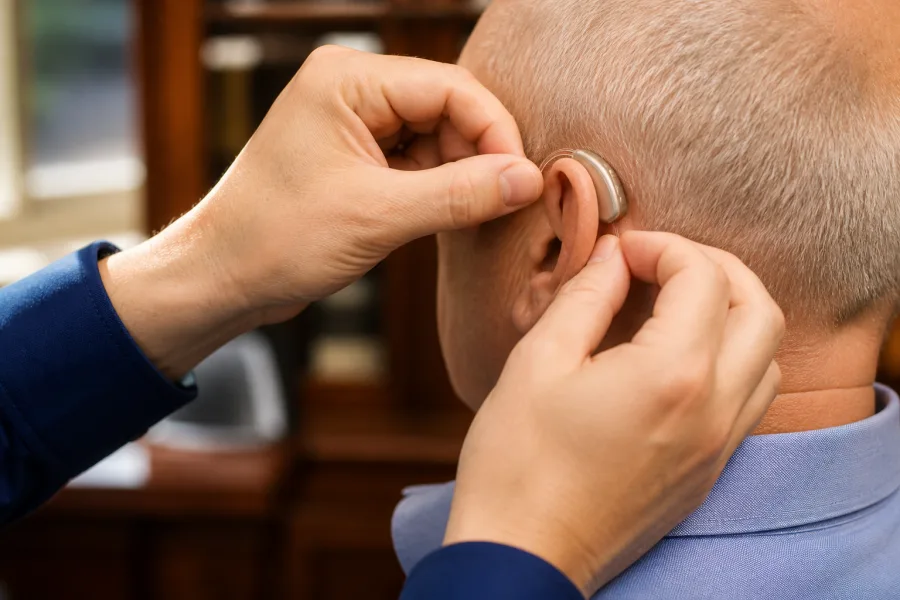
If the screening does show hearing loss, hearing aids may help with the tinnitus too. The NIDCD (opens in a new tab) describes hearing aids as one of the main treatment options for people with tinnitus who have hearing loss, partly because amplifying outside sounds can make the tinnitus less noticeable. Many current hearing aids also include built-in sound features aimed at tinnitus.
The honest part
If your screening shows that your hearing is fine, you probably do not need hearing aids, and we will say so. Hearing aids are not a tinnitus cure, and they are not the answer for everyone with ringing ears. For some people the most useful next step is a conversation with a doctor or an audiologist, not a purchase from us.
What we can offer beyond the screening is practical guidance: sound enrichment and masking ideas for quiet rooms and bedtime, protecting your ears from further noise, and, if you do have hearing loss, hearing aids fitted and adjusted for you. More on how we approach it is in the tinnitus section of our hearing page.
Protecting what you have
Since loud noise is one of the things the NIDCD links to tinnitus, protecting your hearing is the part fully in your control. Wear hearing protection for loud work, power tools, shooting and motorsports, and give your ears a break after concerts and loud events.
The short version
- Tinnitus is sound with no outside source. It is common and often linked to hearing loss and noise exposure.
- Sudden hearing loss is an emergency. See a doctor immediately.
- Ringing in one ear, pulsing with your heartbeat, dizziness, ear pain or drainage: see a doctor promptly.
- Otherwise, start with your primary care doctor.
- A free hearing screening tells you whether hearing loss is part of the picture.
To book a free screening, call the hearing line at (772) 286-4327.